Wednesday, May 13, 2009

Touching base

I recently received email messages bringing me up to date on the families of two of my school friends. It was very interesting reading, and good to know what everyone was doing, where they were, etc. Rather than responding directly, I decided to post the information here.

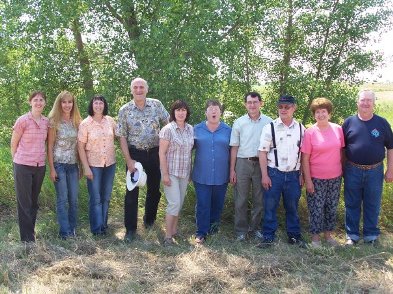
My sisters and I are somewhat scattered, but (with few exceptions) all along Alberta Highways 2, 3 and 4 and the I-15 corridor.

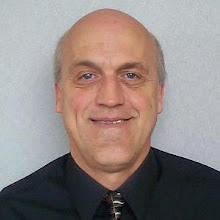
As for me, I have found and married the love of my life, Sara Anne, and live in an "empty nest" in Salt Lake City (you can find a picture of where we live in this post). We have been happily married for four and a half years. We met in community theater and enjoy sharing that hobby.

Colleen and her husband LeRon live and farm near Grassy Lake, along with their three sons (Michael, Craig, Eric), while two daughters live near Chicago (Heather, Michelle (husband Andy and son Matthew)).

Arlene and husband Michael have a construction/demolition/cleaning business near San Diego, and live near their daughter (Jenna (husband Bob and children)) and son (Lance).

Myrna and husband Bruce live in Orem, with Myrna being a music librarian at B.Y.U. near to most of their children (Kelline (husband Jonathan and children), Abra and children living in Alberta, David, Nancy (husband Andrew and daughter Rachel) living in Egypt(!), Patrick, and Josie).

All of us are college educated, which is quite a remarkable achievement for our parents, who didn't have that opportunity. Our father left us in 2000, and mother followed him three years later. They lived in Raymond, having retired from farming in 1986. Shortly after retirement, they spent a year and a half in Salt Lake City, on a mission in the granite vaults, which they enjoyed greatly.

My first wife Christine (now going by Marie) has been happily married to Philippe for thirty years and has a son Jean-Christophe who is an astrophysicist, all living in France. We had been married for 7 years before the divorce, and lived in Provo until I graduated from B.Y.U. and then in France, first in a suburb of Paris, and later in Brittany near the coast.

My second wife Judy has been happily married to Wally (a widower with 6 children) for many years and lives in Provo. While Christine and I had no children, Judy brought three wonderful step-daughters into my life (Heather (husband Mel and daughter Madeline), Melinda (husband Jim and children), Carlie (husband Mike and boys)). And later we had Elizabeth (married to Cody and living in Rexburg, Idaho) and Andrew who attends UVU in Orem. We had been married for 16 years before divorcing, having lived in Tucson (while I finished a Masters degree), Raymond (where I taught at the University of Lethbridge), and Orem (where I worked for WordPerfect and Novell).

Sara brought six more great step-children into my life (Eli (wife Sadie and son Lucas), Rachel (husband Jason and children), Ben, Ammon, Helaman, Jessica). We have taken many trips together. One of the most memorable was a month spent in Bangalore, India, along with her three youngest and my niece Josie. Jessica has recently left home, and we are contemplating our options for this new phase of life.

Death and facebook revisited

Well, it has happened again. Another dear facebook friend has passed away.


This time it was my cousin, Harold Conrad, who has been ill for over a year. When I learned of his illness, I wrote some memories that I have of growing up with him, in a post entitled "Effects of a great man." After mingling with many of his friends and family recently, I learned that I am not alone in this high opinion of him.

His obituary gives a nice summary of his life, and includes this photo.

In this case, it turned out that all of his facebook friends are family members, so everyone knew of his illness and passing. A look at his facebook wall will show pictures of the time last summer when his brothers and sisters gathered near Taber, and my sisters and I were able to visit with him there as well. It was a great reunion.


This is another case where it would be nice if he could have selected someone to manage his account after his departure. It would have been an ideal place to post information about his funeral service. His friends could have commented on the link, thus enabling their friends to see the comment and spread the knowledge of his passing further into the network of people who knew him.

For example, one of my facebook friends communicated this to me privately.
I was so sorry to hear of Harold's passing. After we got the message from you via Facebook, we looked for his obituary notice in the paper and couldn't find it until today. If it weren't for Facebook, we wouldn't even have known about it. [emphasis added]

If I had shared a link to the obituary in facebook, they would have been able to find the obituary immediately.

Thursday, April 30, 2009

Death and facebook

Facebook allows people to share personal information with their friends on the Internet.

It was written by very young people (college students) and appeals mainly to very young people. Nevertheless, some older people are also using it to maintain contact with friends.

Sometimes, a user of facebook dies. An acquaintance of mine, Don Fisher, passed away last October. I heard about it just recently, through other channels.

So, it occurs to me, why doesn't facebook deal with death? In the edit profile section, there is no way to indicate that you are dead.

We ought to be able to designate some other facebook user as our executor, giving that person the ability to change our profile to show our death. The executor ought to be able to post an obituary on our profile, and our friends ought to hear about our death, hopefully, in time to make plans to attend the funeral.

Facebook isn't the only company that doesn't deal well with death. When my mother passed away, we had to contact Melaleuca, a company with which she had a contract, in order to cancel future deliveries and the concomitant financial obligation.

As I carried out these duties, I spoke with someone on the telephone, and they acted as if they didn't believe she had died. Perhaps others, not liking the commitments, had attempted to get out of them is like manner? In any case, we finally agreed that I would send them an official death certificate, and they would release my mother from her obligations.

Unless there is some way to get an Internet connection in the great beyond, there is no reason for a company like facebook to be in denial of death.

Thursday, April 16, 2009

Farm Injury

Farming can be a dangerous industry. Accidents happen, and they can be severe. Our small farming community of Taber has experienced its share of tragedies.


I remember the first time I drove each of my dad's tractors. I started with a small, red one. After a bit, I was allowed to try the big orange one (similar to someone else's, pictured here).

Allis Chalmers D17 tractor

For some reason, this view of it always reminds me of a grasshopper. 

For controls, it has a clutch, gear shift, two brake pedals (one for each rear wheel), and a steering wheel. The clutch pedal and gear shift lever are clearly visible in this picture.

Showing clutch pedal and gear shift lever

It also has a lever which has a neutral position, a slow position (towards the driver) and a fast position (away from the driver). There is no gas pedal, just a hand operated selector behind the steering wheel. Finally, there is an ignition key. The lever and the two brake pedals are clearly visible in this picture.

View of brake pedals and control lever

To move forward, you make sure the lever is in neutral, shift into the desired gear, set the initial gas position, and finally pull the lever towards you. To go a bit faster, push the lever through neutral into the faster position. And of course, you can always give it more gas.

I remember countless trips out to the fields with my dad driving, me sitting on the fender beside his seat, sort of facing inwards towards him and turned a bit to the front. In the next picture, you can see the top of the gear shift lever, the control lever to the right, steering wheel, ignition switch just below that, and the gas controls behind the wheel.

Front facing view showing the control lever on the right

And that is the view I had, as I was returning from my first test drive. I intended to park facing a granary. I approached at slow speed, and, to stop, pushed the lever away from me, towards its neutral position. But, I pushed it too hard and the tractor went faster! It gently nudged the granary and then the rear wheels continued to turn and it bucked up and down. I tried the brakes, but just managed to get it twisting a bit as I pressed harder first on one brake, then on the other. I thought about the clutch, the ignition, etc. Finally, I realized what I had done to the lever and pulled it ever so gently back into the neutral position, and the bucking stopped. I was then able to stop the engine, and get down. A bit dazed, but no harm done.


Dad worked for many years as a farmer, with no serious accident. But finally, it was his turn, I guess. Myrna describes the accident from her point of view in her post, "Flashback to 1965."

Here is how our mother told the story:
"During the beet harvest of 1965, my husband Arnold was topping beets with a Marbeet - topper, when he impatiently kicked at some beets that were stuck in the cutter. His heel got caught in the pickup spikes and his foot was dragged into the cutter. To free his foot he had to reverse the engine. The spikes tore at his jeans and heavy leather work shoes. He was alone and had to wait for his truck driver, Thelma Winchester, to come in the truck from the other part of the field. She brought him in the truck to the house, and I took him to the hospital. Part of the thickness of the fibula (leg bone) was gone, and the muscle was torn. He was in the Taber hospital for three weeks. Kind relatives and friends finished the beet harvest. Later on Arnold was hospitalized again, and bone from his hip was grafted to his fibula. His leg was in a cast for about six months."


This post is illustrated with a few pictures*. Here is a view of the Marbeet topper. Looks a bit like a medieval torture device, which is what it became for dad on that fateful day.

Marbeet topper


This machine must be mounted on the tractor, and fits between the front and rear wheels on the right side, and fairly snugly up against the tractor. Try to imagine the tractor and harvester combined into a single machine. The spiked wheel ends up just in front of the control lever on the right side. The tractor also tows a wheeled hopper that receives the topped beets.

The combined tractor/topper machine harvests one row of sugar beets at a time. A plow ahead of the spiked wheel loosens the soil. The spiked wheel turns, snags the beet roots, pulling them out of the ground as it turns. Just past the top of the wheel, sharp disks slice off the tops which are rubbed off the spikes and fall to the ground. The topped beet roots are thrown to the right (by the spinning disks) onto a kind of escalator that takes the topped beets up and behind the driver where they fall off into the towed hopper.

If you look closely at the spiked wheel, you'll see that the spikes are curved a bit towards the front on the top, and therefore towards the rear at the bottom where they grab into the top of each beet root. From time to time, a beet doesn't make it cleanly through the spinning disk and dad would give it just a little kick to send it on its way. He must have done this thousands of times over the years.

The accident occurred when, on one of the these kicks, he got the heel of his work boot caught by one of the curved spikes. He had more presence of mind that I did on my first test drive (not to mention years more of experience), so I'm sure he was able to stop the machine quite quickly.

Getting it into reverse so that his boot could be backed out away from the blades must have been a lot harder. His right leg would have been pulled forward quite a bit, and he had to somehow reach down with his left foot hard enough to actuate the clutch so that he could shift into reverse. He must have been kind of half standing to perform this maneuver. Once the gear shift was in reverse, he could relax a bit, then pull the lever gently towards him, so as to move the whole machine in reverse so that he could extricate his foot.

Then of course, he had to wait to be discovered and taken to help. One can only imagine the thoughts and feelings that must have coursed through him as he waited. Pain of course, embarrassment for the flawed kick, worry about getting the rest of the crop harvested, etc. Thank goodness for loving family and neighbors who took care of everything while he recovered. Our town wasn't much for open verbal expressions of love, but whenever one of us needed help, people came forward. Thank you, townspeople of Taber.

*The pictures are taken from two websites. Rather than steal bandwidth from these sites, I have put copies of the pictures elsewhere. I hope the two sites will consider this a fair use. In any case, you are invited to click on any of the pictures to visit the sites from which the pictures are taken.

Sunday, April 12, 2009

Fall on a Spring Day

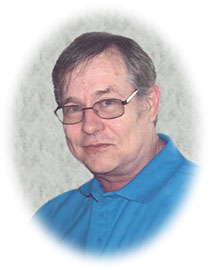
This is a story from many years ago, concerning a fall on a spring morning. It's told from three different points of view. First my own voice, remembering, then what I recall from my father's memory, and finally, my mother's own voice.


One spring day, my father woke me up early, and asked me if I would climb up a telephone pole near our house (seven miles out of town) and do a repair. Most likely I complained because sleeping in was my preference. I remember it being a beautiful spring morning, just before sunrise, but already quite light outside. There was plenty of time to do the repair, then get ready for school and catch the number six school bus into town.

Dad drove a three ton truck beside the pole, set up a ladder, in the truck bed, leaning up towards the top of the pole. I strapped some spikes* onto my legs. This was pretty exciting, as I had wanted to use these before, but had never been allowed.

I climbed to the top of the ladder, then put a strap around me and the pole, dug in the first spike and climbed to the top**. It was quite heady to have two spikes holding my weight while I leaned back into the belt. And pretty exciting too, to be 30 feet above the ground. The last thing that I remembered was pounding on the nails in a wooden bracket at the top of the pole with a hammer.

I awoke in a hospital bed, and the first thing I told the nurse was that I had done it to get out of going to school. I remember some friends from school visiting me during my hospital stay. In the end, all that was wrong was a few cracked ribs.


Talking it over with Dad later, he said he was working across the road and heard the distinctive squeak of a barbed wire fence being stretched. He looked up and the pole was gone!

After running across the road, he found me, still strapped to the pole, which was on top of me, but with my back bent over backwards on a ditch bank. He thought that I was dead and held me in his arms. Since I was still breathing, I was taken to the hospital.

Talking it through, we decided that I must have fallen down on top of the pole, because it fell away from the side that I was facing. The pole must have bounced, possibly from hitting the barbed wire, and paused long enough for my body to slide around to the bottom side of the pole, which then landed again on top of me. It would be hard to imagine surviving a more direct fall.


My mother wrote the story herself, this way:

My husband "was the trouble shooter for our local telephone line but because his leg was in a cast, he was not able to climb the telephone poles to repair the lines. The next spring ... the line was down at our own house, south of our yard. [He] asked our son Bruce if he would climb the pole and do the fixing. Bruce was reluctant because he had never done it before, and I thought, 'There he goes like a lamb to the slaughter!' He had to put on some heavy metal climbers and a heavy leather belt to fasten himself to the pole."
"We didn’t know at that time, that in the spring time, poles are unstable under the ground. As I watched from the window, when Bruce got to the top of the pole, I noticed that the pole was starting to fall sideways. Bruce was strapped on but his weight made it so that the pole would come down on top of him."
"We had a tradition in our family that whenever there was some special need, someone would say 'family prayer' and we would kneel on the floor together wherever we were and have a family prayer. And I think in the kitchen that day, we were on our knees before the pole hit the ground."
"I thought surely he would be terribly hurt or killed but miraculously he wasn’t. He was taken to the hospital and was told that he would be in bed for a few months. Instead it was just a few weeks and he was recovered and back to school. I know it was through prayer and priesthood blessings that Bruce recovered so quickly and I’m so thankful for the blessings of our Heavenly Father."


*Something like these:


**If you haven't ever seen this done, there are some images on the Internet of others climbing in this way: cody climbing the same tree, but he has done this a lot more than I have

Friday, April 10, 2009

Friday Flashback: Music

A few years ago... No, many years ago, I had a life-altering experience.

It happened in the mountains of southern France, specifically the range known there as "la Montagne Noir." For geology buffs, this is a small range at the very southwestern tip of the central mountains in France, "le Massif central."

How I happened to spend some time there is another interesting story. I was on vacation from my job in Paris. My wife and I were in Béziers, visiting her parents. Towards the end of the two week vacation, I got quite sick, and they took me to the family physician, Dr. Attal. I don't remember the diagnosis, but he began writing a prescription for two weeks of bed rest. Christine (now known as Marie) piped up and said the family was going to visit her grandmother in the mountains. Dr. Attal, said, okay, two weeks of rest in the mountains. I sent a copy of the prescription to my boss in Paris, and we drove up to the mountain village of Arfons. (Pictured here. The mountains in the distance are the Pyrenées.)

Arfons, photo by Alain Couzinié, courtesy WikiCommons

So, that's how it came to happen. Exactly what happened is the rest of the story.

I took care of myself and mainly stayed in bed. But during our stay there was a day of festival in the village. As a part of this, some village musicians got on a flat wagon drawn by animals and went from house to house performing. At each home, they were thanked and given gifts of produce.

How this changed my life is that I realized that this was a centuries old tradition in the village. By that time of course, music could be heard at will, through radio, records, or magnetic tape. But for hundreds of years, most villagers could only hear a performance of music during the festival time, when the musicians came door to door. Hence the lavish gifts.

Today, everyone can have their own music. And you hear people speak daily of "my music" which they can listen to whenever they want. Do we realize how fortunate we are?

As a child, growing up, we listened to certain radio programs. We had a record player, and a few well-loved records. My mother would perform sometimes on the accordion or piano. Later, we got television. Later still, I acquired a reel to reel tape recorder.
Photo courtesy WikiCommons

But I couldn't afford many tapes, so, again there were a few well-listened to pieces, such as my favorite at the time, In A Gadda Da Vida by Iron Butterfly.

Music through the centuries. Now more readily available than ever...

Thursday, April 9, 2009

Knowing and Caring

Way back when I was a professor, teaching Computer Science, there was a favorite saying on my bulletin board. It was in a place that I could see easily, as a daily reminder, intended for me rather than for my students.

It is a simple, and relatively well-known antimetabole that goes like this:

"No one cares how much you know until they know how much you care."


Looking at it reminded me to care about my students. Caring about the attendees at my recent presentation reminded me of the saying.

Writing this reminds me of a student I met for the first time just after I had posted the final grades for a largish class.

He fingered his name at the bottom of the list and addressed the "F" next to it. He begged me to raise his grade to a "D-" so that he could keep his scholarship and not have to go work for a year in the oil fields.

I countered by gesturing up the list from his name to the nearest "D-" and suggested that it wouldn't be fair to all those people to raise him up above them. They had at least taken a quiz or two, or handed in an assignment or two. They had at least attended class one time.

His shoulders slumped as he agreed.

I was very happy to see him in the hallways a year later. Not only had he survived a year in the old fields, but he had learned a valuable lesson. And earned some credit in the school of hard knocks.